The Minho is a green, damp region criss-crossed by rivers — and you can taste that on the plate as much as in the glass. Here people drink Vinho Verde, eat rustic, generous cooking, and take their time over it. Here is what you need to understand what is in front of you, and what to order without hesitating.
First things first: verde does not refer to the colour of the wine. It refers to its youth. Vinho Verde is a wine you drink young, within the year, without waiting. It is an appellation tied to a territory, that of north-west Portugal, between the Douro and the Spanish border. Paredes de Coura is right in the middle of it.
In the glass it is light, fresh, often faintly sparkling, with a generally low alcohol content. That gentle natural fizz and clean acidity make it a formidable summer wine, to be served well chilled. There are whites, but also rosés and reds — the latter are rarer outside the region, and reward the curious.
The landscape itself tells the story of the wine. Out in the countryside you will still see vines trained high on pergolas or along trees, up in the air, to let the breeze through and allow something else to be grown underneath. An old way of doing things, typical of the Minho.
Two grape varieties dominate the region's reputation.
Alvarinho is the great name of the northern part of the appellation, grown mainly in the border zone, around Monção and Melgaço, not far from here. It gives fuller, more aromatic whites with real substance — wines that can stand up to a proper meal, not just an aperitif. It is the same grape as Galician albariño, on the other side of the river.
Loureiro plays on finesse: floral notes, bright acidity, plenty of freshness. It is often the ideal companion to fish and seafood.
Alongside them you will also come across Arinto, Trajadura or Avesso, on their own or in blends. The simplest approach, in a cellar or a restaurant: ask what they make in the valley. People will be delighted to tell you.
The cooking here is rustic and filling, made for people who worked outdoors. It has not changed, and so much the better.
The emblematic dish. A rich, hearty pork stew, traditionally served with rojões and a maize-flour porridge. It is not a light dish, it is not a discreet dish — it is a winter dish, a feast-day dish, a dish for a full table. Taste it once and you will remember it.
The rivers of the Minho, the Coura among them, produce a trout that is prepared simply: grilled, or pan-fried with smoked bacon. Often the best choice on the menu when you want to eat the landscape without weighing yourself down.
The enchidos — chouriço, salpicão, presunto — are wood-smoked in the northern tradition. They are served as a starter, slipped into slow-cooked dishes, or grilled. They are the backbone of local cooking.
The maize bread of northern Portugal: dense, with a thick crust and a tight yellow crumb. It goes with everything, from caldo verde to charcuterie, and keeps for several days. Look for one from a traditional bakery oven — the difference is obvious.
Portugal's best-known soup, and it comes from here. A potato base, finely shredded cabbage, a drizzle of olive oil, often a slice of chouriço. Simple, green, comforting. With a piece of broa, it is a meal.
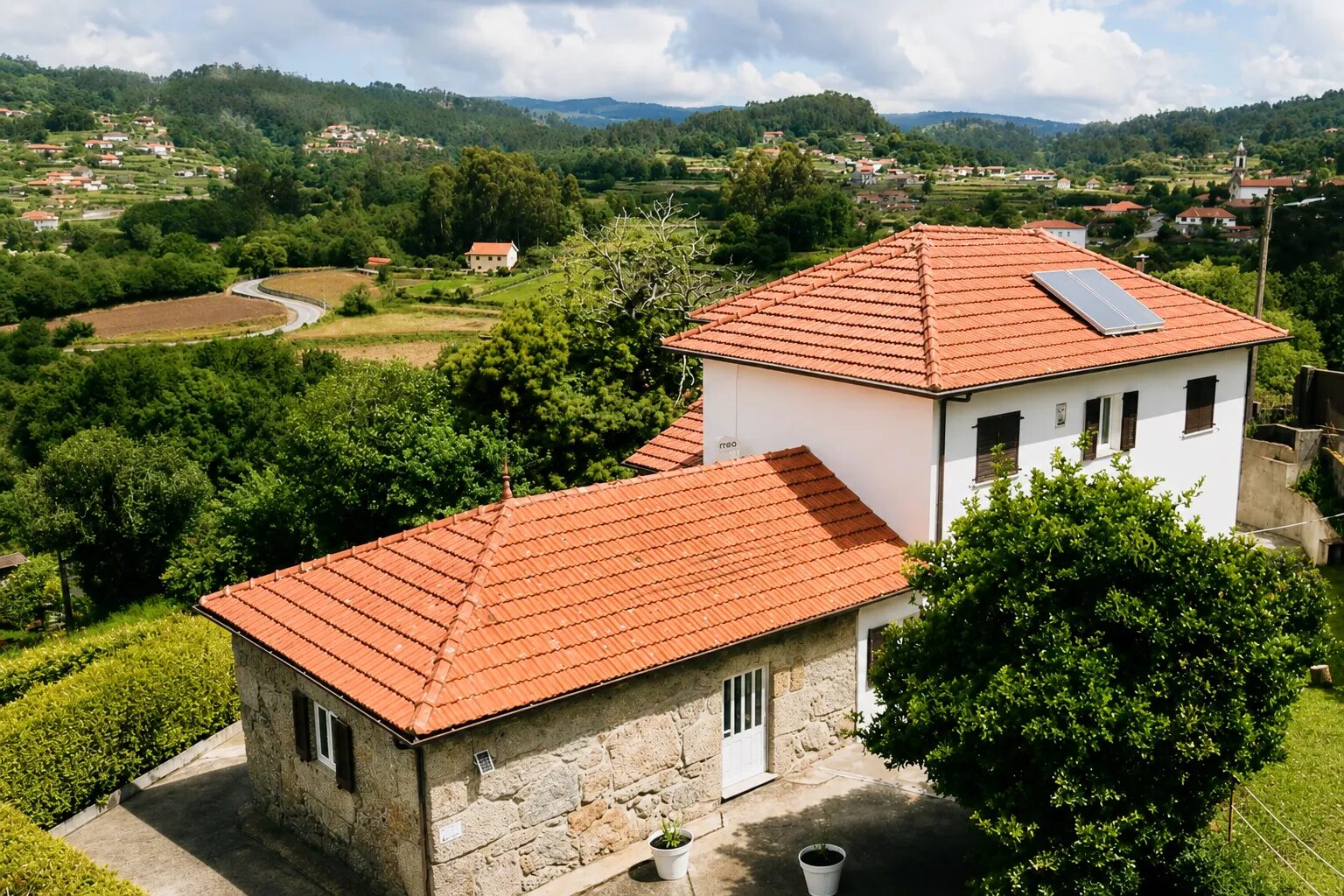
Two quiet stone houses in the heart of the Vinho Verde region. The perfect setting for taking your time over a meal.
See availability →The valley and the surrounding area are home to many quintas — family estates, often handed down over several generations, where vines are grown alongside the vegetable patch and the orchard. Many open their doors for a tour of the winery followed by a tasting, sometimes a meal.
Two pieces of advice before you set off. First, book: these are small operations, rarely open all day, and an unplanned visit can find a closed door. Second, check current opening hours and conditions with the estate or the Paredes de Coura tourist office — they shift with the season, and many close during the harvest.
If you only visit one place, choose a small producer over a large cellar. The tasting is more personal, and you will leave with bottles you will not find anywhere else.
Every year, Paredes de Coura celebrates its table with the Sabores do Rio festival — "the flavours of the river". Local produce, Minho cooking, local growers and regional wines: it is the best moment to taste a lot of things in a short time, and to understand what really grows in the valley.
Dates and programme change from one edition to the next: check the official municipal website for Paredes de Coura before fixing your travel dates.
A young wine from north-west Portugal: light, fresh, often faintly sparkling and low in alcohol. The word "verde" refers to its youth, not its colour.
Alvarinho, fuller and more aromatic, and Loureiro, floral and lively. You will also come across Arinto, Trajadura and Avesso.
Sarrabulho, river trout, smoked charcuterie, broa and caldo verde. With a glass of well-chilled Vinho Verde.
Yes, several estates offer tours and tastings, generally by appointment. Check current opening hours with the quinta or the tourist office.